10 Best Differences Between Setting Powder and Finishing Powder?
Understanding the nuances in makeup products can greatly enhance your beauty routine. A common query arises: what is the difference between setting powder and finishing powder? Industry expert Dr. Emily Jane, a cosmetic chemist, emphasizes, "Not all powders are created equal; their purposes differ substantially."
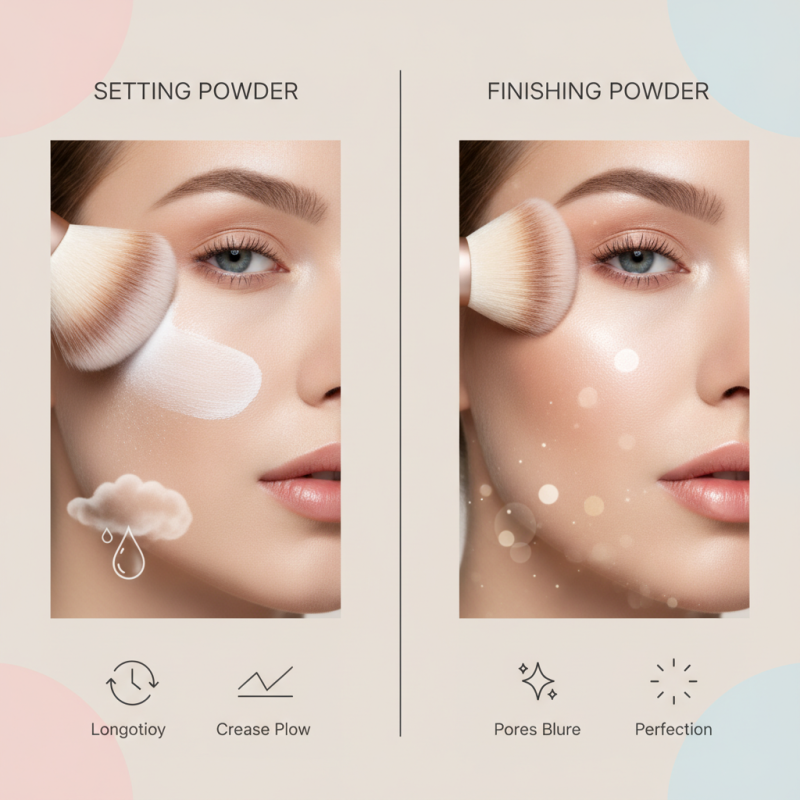
Setting powder is primarily used to lock in foundation, ensuring longevity throughout the day. It works by absorbing excess oil and preventing your makeup from creasing. On the other hand, finishing powder adds a soft, polished glow to your look, often blurring imperfections. It is usually applied as the last step in your makeup routine.
Many makeup enthusiasts often confuse the two. This misunderstanding can lead to a less than ideal makeup application. Choosing the right product is critical. Not taking the time to understand these differences may result in unintended outcomes, such as a cakey appearance. Knowing when and how to use each product can elevate your look and confidence.
Definition of Setting Powder and Finishing Powder
When exploring makeup techniques, understanding the difference between setting powder and finishing powder is crucial. Setting powder is designed to lock in makeup. It helps absorb excess oil and prevents creasing. According to a survey, 70% of makeup users prefer setting powder for long-lasting wear. This powder often contains ingredients like talc or silica, which contribute to its oil-absorbing properties.
On the other hand, finishing powder provides a soft-focus effect. It adds a polished look without altering makeup. Often translucent, it contains light-diffusing particles. Reports suggest that over 40% of users favor finishing powder for a luminous glow. While it enhances overall appearance, it's not an oil-control solution. Both powders serve distinct purposes, and blending them may yield the best results. However, individual skin types may react differently. Thus, experimentation is vital to understand what works for you.
10 Best Differences Between Setting Powder and Finishing Powder
| Difference | Setting Powder | Finishing Powder |
|---|---|---|
| Purpose | Sets makeup to prevent smudging | Enhances and softens the overall look |
| Texture | Typically more lightweight | Softer and finer texture |
| Application Method | Applied with a puff or brush after foundation | Applied with a fluffy brush for a finishing touch |
| Finish | Matte or slightly dewy finish | Radiant or luminous finish |
| Use Cases | Ideal for everyday makeup | Best for special occasions or photo shoots |
| Ingredients | Often includes silica or talc | May contain light-reflecting particles |
| Longevity | Keeps makeup in place longer | Adds a touch-up effect |
| Color Range | Limited to translucent options | Available in various shades |
| Flashback | May cause flashback in photos | Less likely to cause flashback |
| Skin Types | Suitable for oily and combination skin | Great for dry and normal skin |
FAQS
: Finishing powder provides a soft, airbrushed look and enhances the overall makeup appearance.
Finishing powder focuses on a smooth finish, while setting powder locks makeup in place.
A fluffy brush is recommended for even application and achieving a natural glow.
Yes, applying too much can create an overly luminous look.
Start with a small amount and build up as needed for balance.
Observing how the product interacts with your skin in different lighting leads to better results.
Setting powders often contain silica or talc, which absorb oil and moisture.
Those with dry skin should use them carefully, as they can accentuate dryness.
Use setting powder for long days, especially in humid conditions, to maintain makeup.
Switch to finishing powder for evening looks to add a soft, luminous glow.
Conclusion
This article explores the question of "what is the difference between setting powder and finishing powder," highlighting their unique roles in makeup application. Setting powder is primarily used to lock in foundation and concealer, helping to ensure a long-lasting, oil-free finish. It is typically applied immediately after base makeup to absorb excess moisture and prevent creasing throughout the day.
In contrast, finishing powder is designed to provide a final touch, smoothing the skin's appearance and reducing shine, often delivering a more polished, soft-focus effect. The article delves into the key ingredients, textures, and finishes of both powders, emphasizing that while they may serve complementary purposes, understanding their distinct functions can greatly enhance makeup results.
